


Up until recently, I have not really considered myself a bowyer - a journeyman bowyer perhaps, but not a full-fledged bowyer. Lately, however, I have noticed some peculiar changes that have caused me to question that narrative. Like a toddler integrating new movements and abilities, I seem to be integrating some new patterns and powers.
For one, I recently made a quiver of remarkable bows from some very challenging and diverse staves: three from unfamiliar wood types and the fourth from a very knotty yew stave. Additionally, I have been ambling differently in nature, observing more details as if guided by a new superpower: the ability to find potential bow wood where before I saw only a forest of trees. Today for example, while hiking with my wife, Brea, along a mountainous, forested trail near our farm, one which I have likely hiked a hundred times, I saw a small but mature Pacific yew tree immediately beside the path. How could I have missed this so many previous times? The forest is almost exclusively defined by half a dozen types of trees - arbutus, Douglas fir, red cedar, grand fir, Garry oak, and maple - but where there is one Pacific yew, there are likely others. Fifteen minutes later, my eyes scouring the undergrowth, I found a copse of yew trees 30 meters off of the path, including one small but straight tree that has tremendous bow potential.
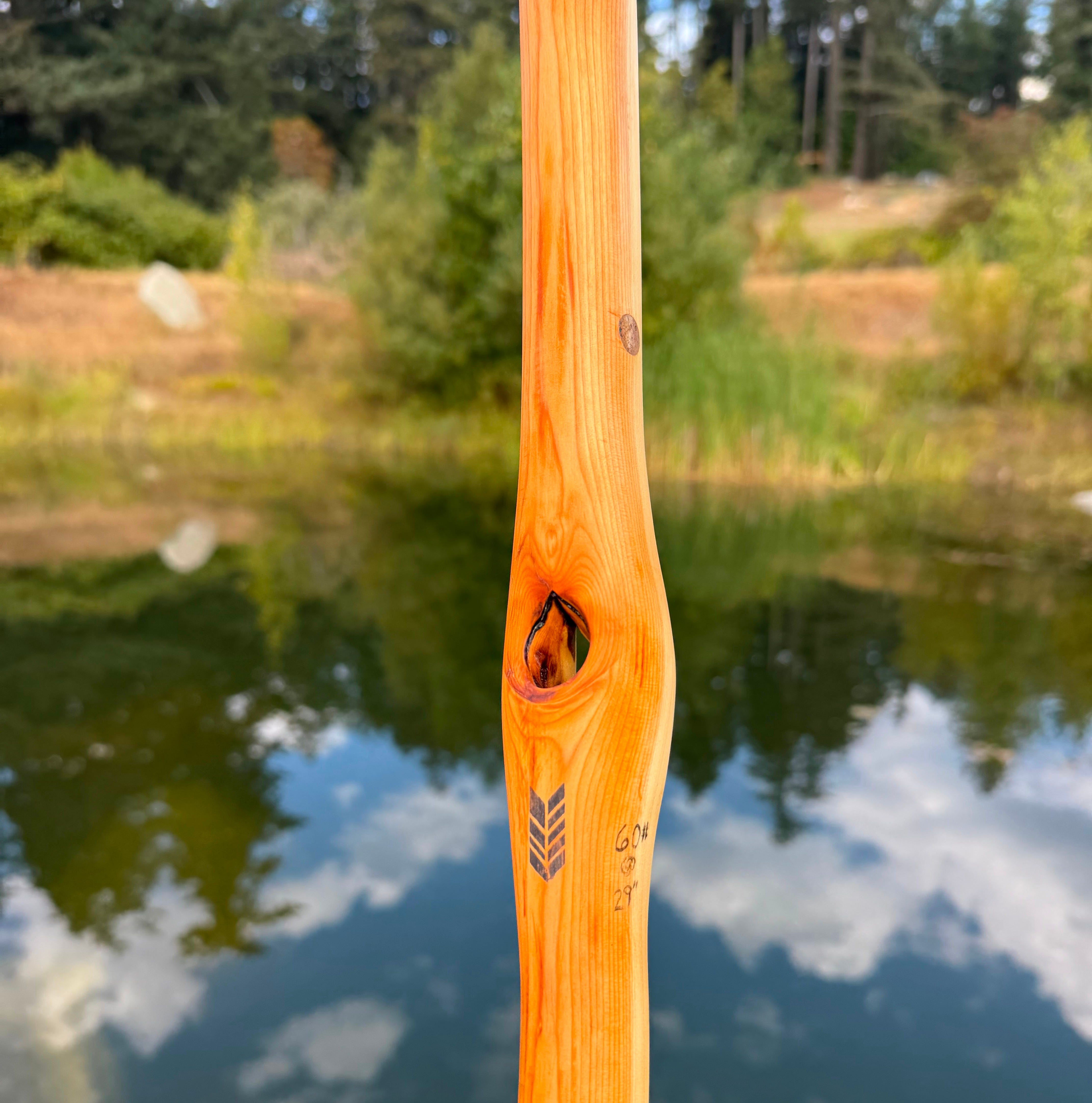
If I am growing worthy of the title of bowyer, it is nearly entirely due to the master bowyers who have painstakingly attempted to mold me. Last year I had the distinct privilege of mentoring under 14 of the finest during a world tour with my daughter, Ela, known as Project Quiver. Under the bowyers’ expert guidance, I carved some familiar bows, such as a Pacific yew English longbow with my first ever teacher, Jamie MacDonald of Ravenbeak Natureworks in Western Canada, but I also followed my teachers into what was distinctly uncharted territory for me. For example, I had never heard of a Tybrind Vig bow, but I carved one of those from wych elm with Erich Streichsbier of Sparrow Bows. The following week I carved a Bodman bow from alpine laburnum under the tutelage of Simon Kehl in Switzerland. Perhaps the most far-reaching detour exposed me to Kyudo, the traditional Japanese martial art of archery, whereby Stefan Tim of Bamboo Bows taught me to carve an 87-inch long yumi bow.
Despite the world-class instruction each bowyer provided me, I learned from many of my mentors that our best teachers are often not the experts but instead the woods that we carve. Nacho Marco in Spain says black locust (Robinia pseudoacacia) has been his greatest teacher, having helped him to finely hone his tillering skills. Correy Hawk of Organic Archery has learned from the tree most available to him how to make exceptional bows from what has largely been considered a mediocre bow wood: common hackberry (Celtis occidentalis). This summer, thanks to the handful of staves gifted to me by Ryan Gauthier of Stormcrow Archery, I have had some generous teachers in some woods that I did not even know were bow worthy: sassafras, persimmon, and oceanspray. I am now completely captivated by the latter, which has been the cause of many explorations in nearby forests and neighborhood roadsides.
Oceanspray (Holodiscus discolor) does not often grow thick enough to be made into a bow, but when it does, it offers excellent properties: strength, flexibility, and straight growth. Less a tree and more a shrub, it grows in clumps with a dozen or so stalks, which, while straight, are generally only unbranched for the first 48 inches. The shrub, with a wide-ranging North American habitat, from the Rocky Mountains to the Pacific coast, traditionally has been a valuable plant to Indigenous peoples. They used the seeds and leaves for food and medicine, made tea from berries to fight infections and nourish the blood, and shaped the wood for weapons, furniture, and much finer tools such as nails, needles, and hooks.
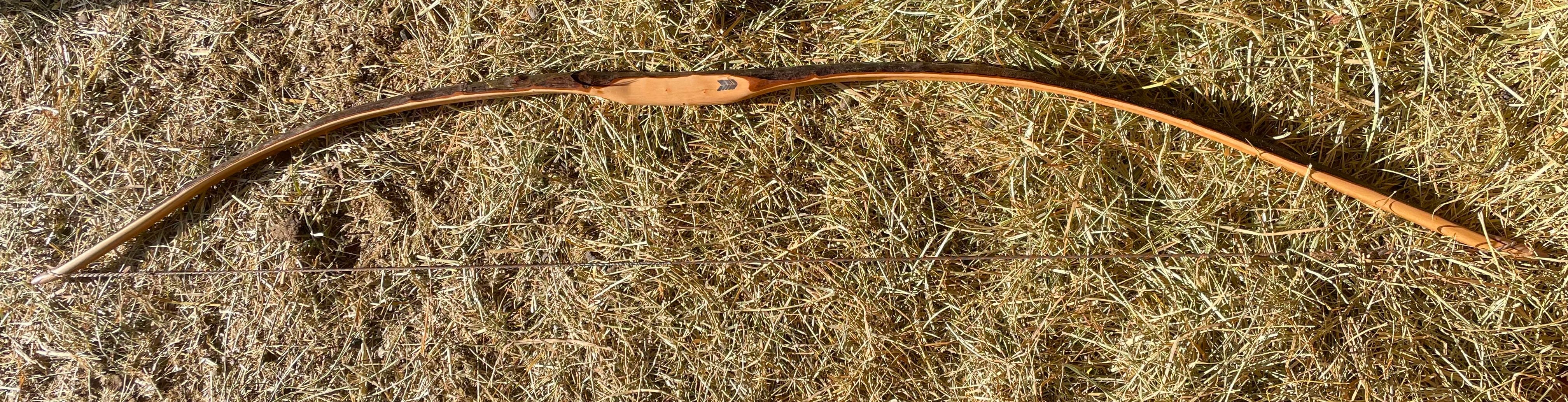
I don’t often find oceanspray thick enough for bow crafting, but its prevalence around my Vancouver Island farm has reminded me multiple times not to reconnoiter in nature without my foldable saw. I find hundreds of plants every outing, and with a dozen or so stalks to each, I occasionally find the one in a thousand that is bow worthy. These I harvest eagerly with immense gratitude for the swift renewability of oceanspray. Unlike another common bow wood in the Pacific Northwest, the aforementioned Pacific yew, Taxus brevifolia, which can easily take 50 years to reach bow stave size, oceanspray grows to maturity in about five years. For yew, considered one of the best bow woods in the world, the wait might be worth it, but with the dwindling supply of yew trees, attributed to large scale and aggressive logging practices, the future of Pacific yew is greatly threatened. To be clear, Pacific yew is not being targeted by logging operations but is instead caught in the crossfire. Yew traditionally grows in dense forests of Douglas fir and red cedar, valuable timber woods, and while these two larger trees are felled to be hauled out, yew is crushed in the process and either used for roadbase, or left in situ to rot. With decades needed to grow yew to an arm’s width, replanting is not a viable option.
Since giving up on the final stave of the mixed wood handful gifted to me by Ryan Gauthier, an ash stave with an egregious propeller twist that I subjected to more than two dozen heat corrections, I have been taking my stave harvesting responsibilities seriously. Keen to carve more bows when I return to my farm next summer, my new powers of observation have not been letting me down. Biking past another nearby cemetery where a few locust trees caught my attention and drew me in, it was elm saplings (genus Ulmus) in the adjacent forest that eventually came home with me. I carved my first three elm bows in Europe during Project Quiver: the aforementioned Tybrind Vig bow from wych elm, a Mollegabet from slippery elm with Phil Steinhauser, and a wych elm sapling flatbow with Per Friden.
Thanks to the Bodman bow I carved from Swiss alpine laburnum, I have also discovered an abundance of the “golden chain” tree (Laburnum watereri) in my backyard and around my neighborhood. Laburnum is a prolific seeder and, if left unchecked, will spread quite easily. Like oceanspray, it also tends to grow in clumps, but unlike oceanspray, it grows into mature trees that are rarely straight. When a straight stave is obtained, however, the fortunate bowyer has the privilege to shape a beautiful treasure. With dark, walnut-colored heartwood surrounded by bright yellow sapwood, and remarkable strength and elasticity, a well-made laburnum bow is both striking in appearance and arrow impact. I recently received permission to harvest a mature laburnum with a semi-straight trunk of three bow lengths from a churchyard near my farm. The church, which is the oldest continuously operating church in British Columbia, surrounded by a hauntingly beautiful cemetery, is where I taught both my kids to ride bicycles, and it was there recently when riding with my son, Oli, that I discovered the tree, the only living and viable section of a decaying clump. I inquired with the groundskeeper who gave me enthusiastic permission, and the remainder of my day was relegated to felling, cutting, and splitting the gorgeous tree.
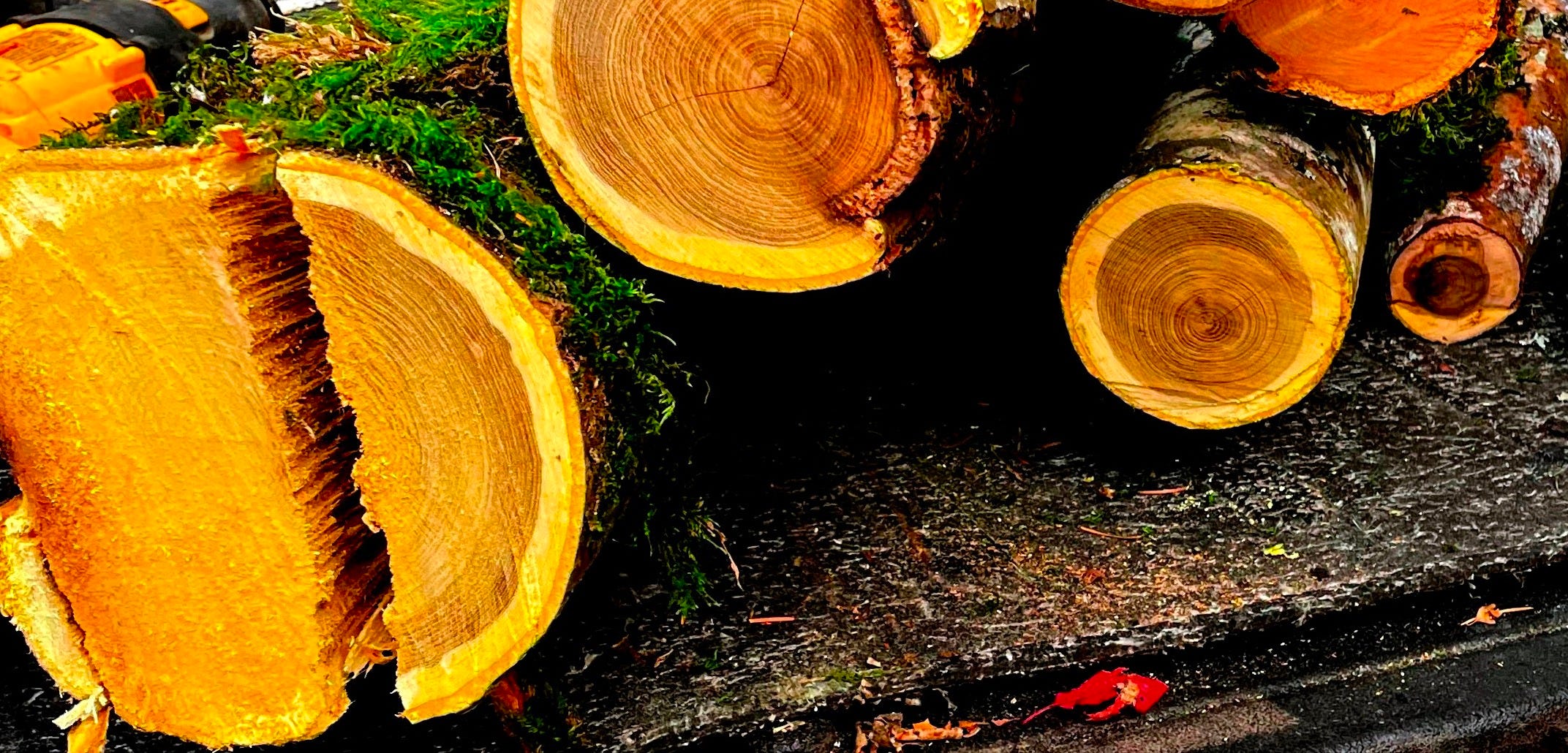
Rounding out my late summer harvest was a motley group of staves I harvested from my farm: a couple purple leaf plum branches (Prunus cerasifera); a handful of English hawthorn (Crataegus monogyna) from a hedgerow adjacent to my archery range; an Irish yew, a decorative cultivar of Taxus baccata; and some big leaf maple (Acer macrophyllum), which I have read is a poor bow wood, but it grows so damn straight, branchless, and prolifically that I have to find out for myself.
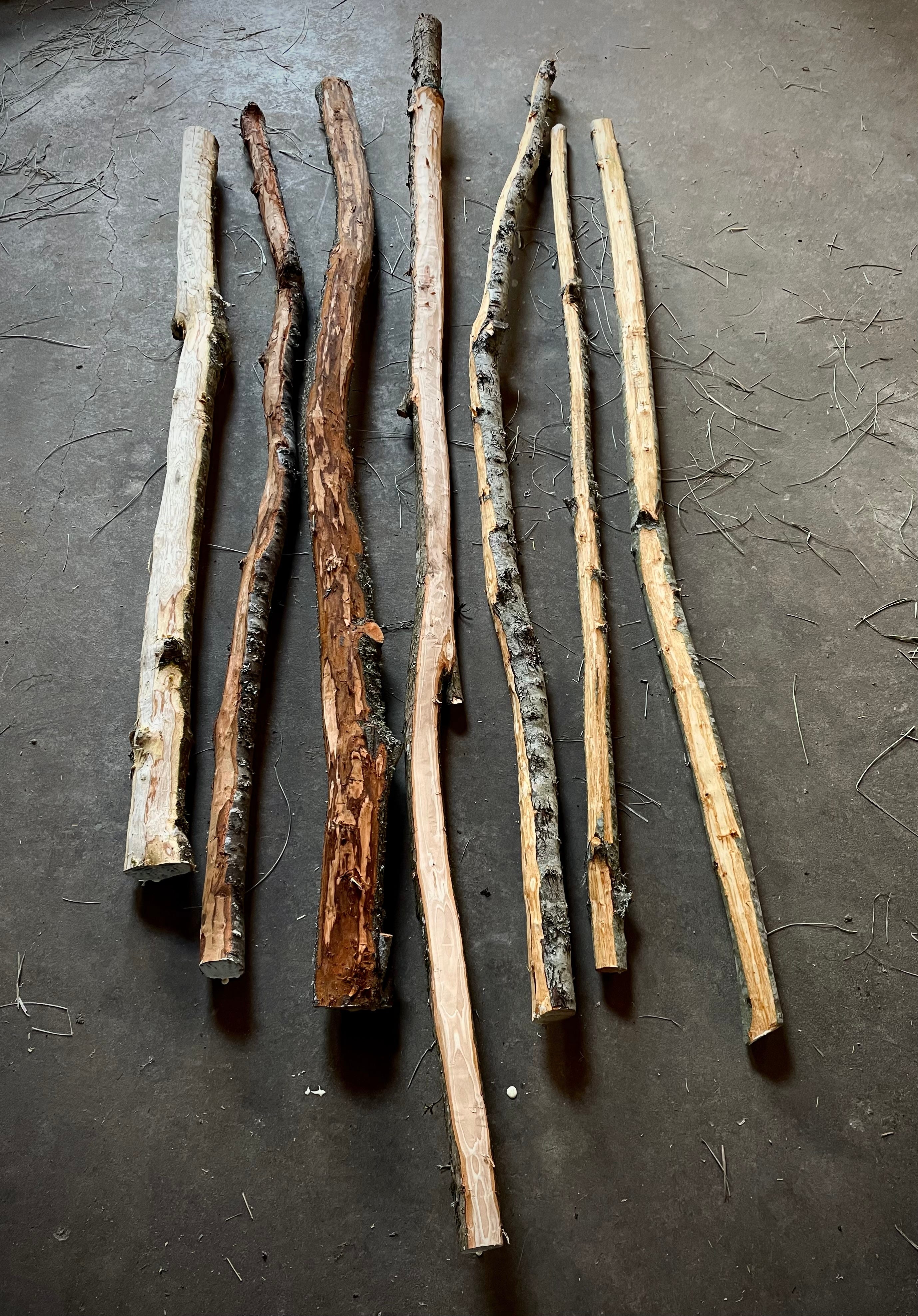
So now that summer has winded down and I am returning to my tropical home, where I recently had a new workshop built and collected a stockpile of local potential bow wood, I am tentatively settling into the idea of actually being a bowyer. And with this confession, I’ll leave you with the words of famous playwright William Shakesbowe: All the world’s a stave, and all the men and women merely bowyers.