


Only a few minutes into a recent podcast interview, my guest abruptly said, “I’m having a love-hate relationship with you.” For a moment, I was genuinely taken aback as I was unsure what I could have said that would have divided his opinion of me. It soon became clear, however, he was not speaking of “you” as in me but instead of “yew” as in the tree. The guest was Austrian bowyer Gerhard Wiesler, and he explained that he has only a 75 to 80 percent success rate when carving a bow from European yew, and his students fare far worse at around 50 percent.
Another prominent European bowyer, Simon Kehl of Switzerland, says that for selfbows, European yew is his favorite wood, so much so that he jokingly refers to it as his second wife. Simon does not argue with those who say Osage orange is the king of bow woods. But if that is the case, he says, “Yew is the queen!”
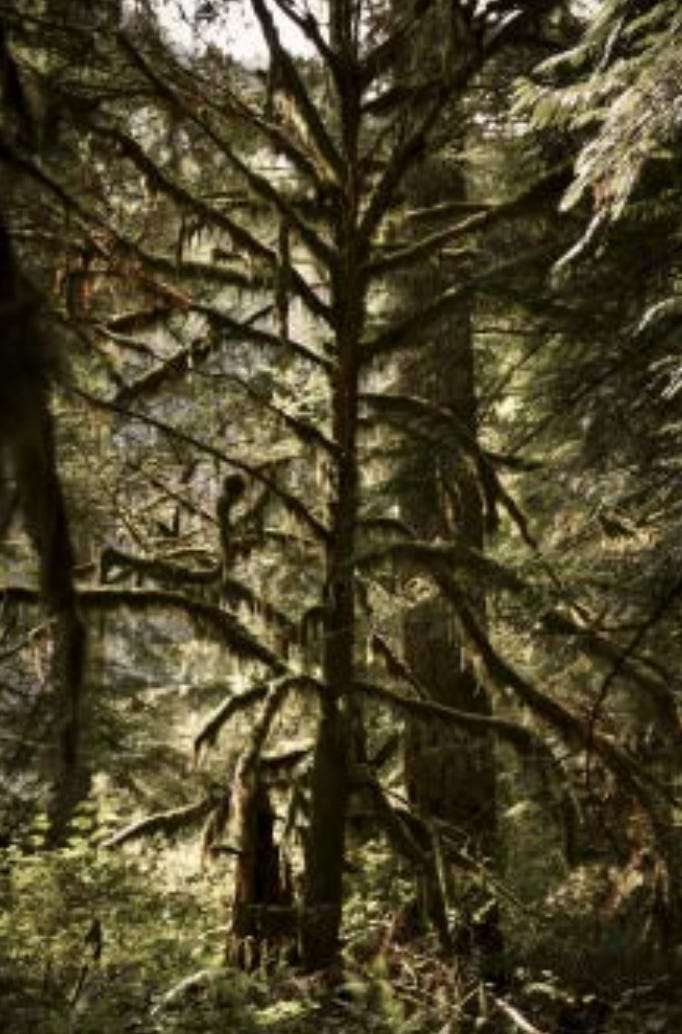
Despite yew being widely recognized as bow wood royalty, opinions of its merits are mixed. Some bowyers, while having access to other bow woods, choose to carve nearly exclusively with Pacific yew, which, as we will discuss, does not behave exactly the same as European yew. I have heard from others who have access to many highly regarded bow woods that, while they love to carve those woods, their favorite bows to shoot are all yew bows. Yet others swear that there is just something wrong with yew. (An audio version of this article sure would be confusing.)
While I don’t intend to necessarily find a consensus or a resolution to the dilemma many face with yew, it is a fascinating and polarizing bow wood that is worth learning more about. So I turned to researching old archery texts and the Internet to find out what it is that is just so enigmatic about yew.
To begin, I was curious about the earliest evidence of yew being used for bows. I knew a partially-carved Taxus baccata (European yew) stave was discovered in 1991 from the Ötzaler Alps near the Austrian-Italian border. It was carried there approximately 5300 years ago by a man, now referred to as Ötzi, who was mortally wounded by an arrow to the back. Among Ötzi’s other possessions was a quiver of arrows in various stages of completion and the oldest ever recovered bowstring, made of sinew.
As significant as this find was, older Taxus baccata bows have been found. A Neolithic yew bow found in the Polish Carpathians predates Ötzi’s by about half a millennium and, even older still, is Britain’s Rotten Bottom bow. But the oldest yew bow discoveries come from La Draga, Spain. Three bows - one complete and two fragmented - are estimated to be from 5300 BCE, making them 2000 years older than Ötzi’s. They are considered the earliest evidence of archery among European farming communities.
While we are on the topic of discoveries, it is worth mentioning the greatest cache of ancient yew bows ever discovered, the Mary Rose bows. The Mary Rose was a warship built for King Henry the VIII. It sank in 1545 and was recovered in 1982. In the hold of the ship were chests containing 172 yew longbows, the finest preserved specimens anywhere of early English longbows. These rare beauties are permanently on display in the Mary Rose Museum in Portsmouth, England.
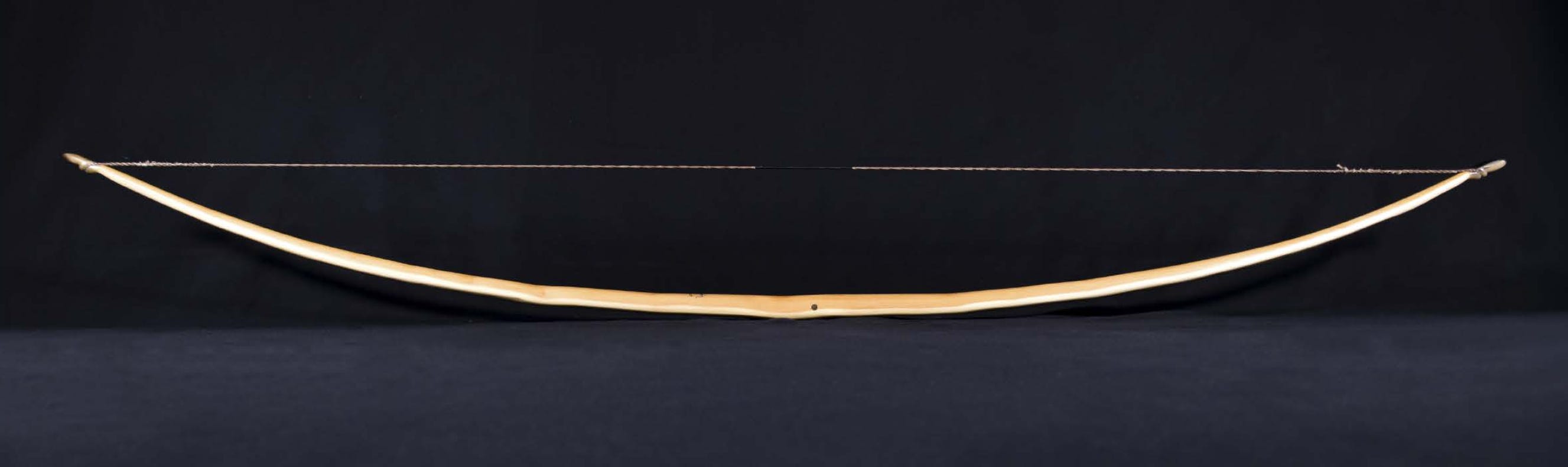
This is not the complete story of the discovery of the Mary Rose bows, however. American physician and renowned archer Saxton Pope laments in his 1923 book A Study of Bows and Arrows, “With all the wealth of…archery tackle which existed in England up to the seventeenth century, there should be preserved not one single specimen of the English longbow or arrow.” He then bemoans over the pitiful find of only “two yew staves in good preservation” in the Mary Rose ship in 1841. What? How did Pope know about the Mary Rose ship 58 years before the vessel was recovered and speak of its salvage from 80 years prior to that? Well it turns out that in 1836, fishermen snagged their nets on timber from the ship, discovering the Mary Rose after nearly 300 years. A salvage operation began that lasted until 1843, resulting in the recovery of a number of artifacts and the two aforementioned bow staves. But the salvage went no further, leaving Pope no closer to the cache of ancient English longbows for which he desperately longed.
In 1943 the future looked bleak for the Mary Rose, even as she lay on the bottom of the ocean. Believing divers had salvaged all that was worth any value, the ship was scheduled for demolition. A source later claims that the vessel was demolished by Colonel Charles Pasley, a demolition expert for the Royal Engineers. That myth persisted for 128 years until 1971 when divers found several large timbers from the ship protruding from the seabed.1 This was the discovery that would lead to the raising of the Mary Rose a decade later.
While the physical form of the yew bow is steeped in history, so too is the naming of yew. In 1753 Swedish botanist Carolus Linnaeus, the father of modern taxonomy, galvanized the scientific name for the genus of yew, Taxus, in his volume 2 of Species Plantarum. But Linnaeus did not coin this term, far from it.
By peeling back the layers of the etymology of taxus, we find it is possibly linked to the Greek word toxon, meaning bow, which itself is possibly derived from the Iranian and Scythian word for bow, taxša. The Scythians were fierce warriors with the bow, experts in archery from horseback, and innovators of composite bow designs. But evidence does not confirm that they carved bows using yew.
With the Greek word for bow being toxon, arrows became known as toxikos, and from this word is derived toxikon, which refers to poison applied to arrow tips. Going one step further, toxikon is the etymon, meaning the root word, of a modern descriptor for poisons in general: toxic.
These are very intriguing threads to pull if you are interested in word origins, but what has not been clearly established, according to my research, is whether the name taxus for yew derives from the Greek words toxon for bow or toxikon for poison. We know that yew is a superb bow wood, and it is also extremely poisonous. As such, it fits very neatly into both categories, but that is as much as etymologists have been able to untangle.
The first written evidence of the word taxus in reference to yew is by Julius Caesar in Commentarii de Bello Gallico (Commentaries on the Gallic War). In chapter 31 he describes that King Catuvolcus took his own life with “taxo”, which grew in great abundance throughout Gaul (primarily modern France, Switzerland, Belgium, and Germany). Here the plot thickens. Catuvolcus was King of the Eburones, Belgic people. The name Eburones is commonly linked to the Gaulish word for yew, eburos, and thus translates into the “people of yew.” Yet here again, there is uncertainty. Some historians and linguists argue that eburos refers not to yew but instead to rowan, another bow-worthy tree.
If you are keeping score, the list of antithetical viewpoints about yew is growing: yew is a worthy/unworthy bow wood; taxus refers to the word for bow or toxin; and the people of Eburones are named for eburos, either the yew tree or the rowan tree. And then there is the mystery and intrigue around the bow inventory of the Mary Rose.
With Taxus being the genus name for yew, from where is the English word “yew” derived? In Shakespeare’s 1594 First Quarto of Titus Andronicus, a line by the character Lavinia reads, “Unto the body of a dismal Ewghe.” Ewghe is a dialectal variant on the spelling of yew, not the etymon. Yew more likely stems from the Old English variants, īw and ēow, which come from proto-Germanic words such as īwa and iwe. By calling the yew dismal, Lavinia does not seem impressed with it, but with a bit of context we learn this is because she is being threatened with being bound to it until death.
I once interviewed a colleague who shared that in or near her home village in England was an ancient hollowed out yew tree where village councils were held in the belly of the tree. She had mentioned to me then that īwa is an ancient name for yew, which I then christened my next yew bow. My memory is faded on details of the conversation, but I believe she was referring to the “Crowhurst Yew,” one of the oldest in England with a circumference over 10 meters - that is a diameter of greater than 3 meters - and an approximate age of 1400 years. In the 1800s villagers installed a door in a split of the tree, which allowed for private meetings inside. Allegedly, this yew had a surprise within: deep in the heartwood was a cannonball that was fired during the English Civil War between 1642 and 1651.2 If yew trees could talk, imagine the stories they could share.
Speaking of stories, various treatises have been written about yew, and naturally it is a topic of discussion in many classic and ancient archery books. The Art of Archery (1903) was edited by H. Gallice using notes from a 15th century manuscript. The book states, “bows can be made from any wood, but the best are of yew.” It continues by saying, “There are two sorts of it, the white and the red. The white is called Portuguese yew, and it is usually soft and of open grain…On the other hand the redder yew is called Italian yew. This is found of straighter grain than any other, and has a sharper cast.” About the Italian yew he says, “it is harder to work…and breaks more easily than the white Portuguese yew.”
Some 200 years after the 15th century manuscript from which The Art of Archery draws, another The Art of Archerie (1634) appears, this one by Gervase Markham. Markham writes, “Of all woods whatsoever, the Ewghe is that whereof perfect shooting would have a bow made; this wood…is now general and common amongst us…as does appear in this half verse of Virgil: Taxi troquentur in Arcus - Ewghe fit for bow to be made on.”
Markham was referring to the Roman poet Virgil who wrote in the first century BCE. This particular poem - Georgics - speaks of the uses of various trees, including “myrtle and dogwood for shafts and weapons of war.” Regarding yew, he actually calls it “Ituraeos Taxi,” which means yew bows from Ituraea, a biblical region that is now modern Syria and Lebanon. This would have most likely been Taxus baccata, but more on the different species of yew later.
In E. Hargrove’s book Anecdotes of Archery (1792), he speaks of Roger Ascham’s recommendation that bows are “to be made out of the bole of a eugh tree.” A bole is the trunk of the tree, and Ascham is the author of the 1545 treatise Toxophilus, the Schole of Shootinge. Toxophilus sounds like some sort of infectious disease, but by breaking it down into its word roots - Toxo from the Greek toxon meaning bow, and -philus from the Green philos meaning love - we find “the love of archery.”
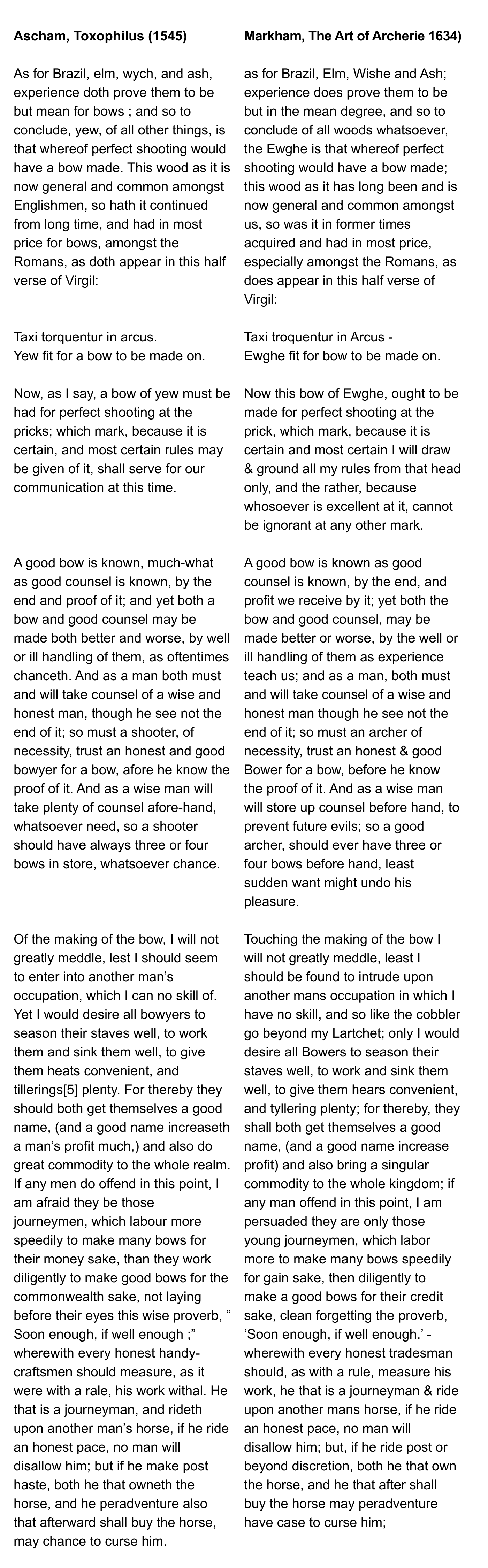
In looking through Ascham’s book, I made an interesting and shocking discovery: Markham, in the aforementioned The Art of Archerie boldly plagiarized the work of Ascham from Toxophilus, which had been written 90 years before. When I say plagiarized, I am not referring to a single sentence either. He copied entire sections of Toxophilus and made only minor changes to wording, even quoting Virgil, whom Ascham had originally quoted. If you are interested in this scandalous tangent, read the similarities in the text boxes below. The blatant theft of materials is undeniable. In fact, there is so much overlap that I think an investigation warrants an article of its own. If you like geeking out on ancient literary conspiracies, stay tuned.
Now let’s return to our primary research about yew. In a 15th century Robin Hood ballad from Robin Hood and the Monk, yew is indicated as the bow wood of outlaws:
Make glad chere, said Little John,
And frese our bowes of ewe,
And loke your hearts be seker and sad;
Your strynges trusty and trewe.
Good sooth ! it was a gallant sight
To see them all of a rowe;
With every man a keen broad sword,
And eke a stout ewe bowe.
Notice here another variant of the spelling of yew. This one - ewe - is the same as for a female sheep, but I could not find any ties between sheep and yew trees to warrant being given the same name intentionally, other than perhaps they both exist in England.
In England, indeed, the yew bow ruled. In The Book of Archery (1841), the author George Hagar Hansard brings the readers attention to the lack of yew in much of England. “In certain districts of England, from some cause or other, yew trees, in a state of nature, are almost unknown.” He extols his wish that had “our” ancestors planted plantations of yew, they could have adequately supplied the bowyers’ need for yew staves. He does find, however, that “in certain parts of Monmouthshire…the Taxus baccata is seen starting from every cranny, cleft, or ‘coin of vantage’ of its mountainous and rocky surface; where, even at the present day, bowstaves might be procured within the circuit of a few miles, sufficient to equip a thousand archers.”
Hansard continues by revealing his exasperation regarding the vast quantity of bows necessary to supply the military. “Every yew tree growing within the united church yards of England and Wales, admitting they could be renewed five times in the course of a century, would not have produced one fiftieth part of the bows required for the military supplies.” He shares an inventory, which is “A complete List of the Royal Navy of England, in the year 1599,” which he prefaces by saying archery then was also rapidly on the decline, indicating that these impressive numbers are actually relatively skimpy.
At the Tower of London.
Bowes, with ccciiijvi. decaied - 8185
Bowstaves - - - - 6091
Slurbowes - - - - 15
Crossbowes - - - - 180
And despite this large inventory, he laments in 1841 that every other arms of the day had been “scrupulously preserved there from a much earlier period.” Yet, he reports, “it is certain no bows have been seen at the Tower within the memory of man, most probably they were used as firewood.” That potential fate to such valuable artefacts is a somber one to consider.
What about on the left side of the “pond”? In the 20th century yew was also recognized as an excellent bow wood in North America. In Hunting with the Bow and Arrow (1923), Saxton Pope does not mix words about his opinion of yew: “Yew wood is the greatest bow timber in the world. That was proved thousands of years ago by experience. It is indeed a magic wood!”
The American Pope is likely referring to a different species of yew than the Taxus baccata that was used for European bows. According to a 1939 paper by the Forest Service of the United States Department of Agriculture titled “Woods for Archery,” there were and are four species of yew indigenous to North America. “Only one of these, namely, Pacific yew (Taxus brevifolia)...is suitable for making bows.” The others, the paper says, are shrubs or very small trees not sufficient for the task.
“Woods for Archery” continues by sharing the consensus among archers and bowyers of “high-grade” bows that yew “is the most satisfactory for the purpose.” The paper backs this up with what was likely then and now a contentious claim: “Among archers and bow makers Osage orange (Toxylon pomiferum) is considered next in merit to yew for bows.” Exploring this claim would take an article of its own so it is noted here just for the record. The savvy reader will have noticed the Latin genus name for Osage orange is not the current official name today of Maclura pomiferum, which was named in honor of geologist William Maclure and introduced by American botanist Thomas Nuttall in 1818. Prior to that, Toxylon, from toxon for bow, which I find to be a more fitting name, was used as the genus name.
Beyond bow worthiness, yew trees are remarkable trees. They are considered sacred, even spiritual, often believed to represent life and death. While many ancient yew trees are found in English churchyards, in many cases the trees are older than the churches themselves, indicating that churches were located in part because of the existing yews. This may not be just for spiritual reasons either; yews can grow so large that they can provide churches significant protection from the elements. While their trunk diameters today are up to 12 feet, some ancient yews have been measured even larger. The Fortingall Yew, for example, located in Scotland, is one of the oldest trees in Europe with an age of 5,000 years. Think about the implications of that astounding figure for a moment: Neolithic yew bows that are 4,900 years old could have been carved from branches of this very tree. A European yew, Taxus baccata, it grows in a churchyard in the village of Fortingall. In 1769 the trunk was recorded to have a girth of 16 meters, giving it a diameter of more than 5 meters, or 16 feet! Today it is less grand as the heartwood has decayed some but still impressive nonetheless.
In general yews are very slow growers, with Taxus brevifolia in North America growing more slowly than Taxus baccata. There are many other yew species including Taxus canadensis, Taxus sumatrana, Taxus globosa, Taxus floridana, and Taxus cuspidata, but none other than Taxus baccata (meaning berry-bearing) and Taxus brevifolia (meaning short-leaved) are used for bow making. For these two - the European yew and the Pacific yew - their unique attributes, which in one way or another garnered the name Taxus - for bow or poison - have brought the greatest peril to the tree and at times have threatened the very existence of both species.
As we have briefly mentioned, yew is known to be highly toxic. Pretty much the only part of yew that is not considered toxic is the fleshy red berries, which are actually not berries at all but arils, a seed dispersal mechanism that attracts critters to eat them so they can pass the undigested, highly poisonous seeds through their digestive tracts into fertile soil.
The poisonous alkaloids are known as taxenes, and vary somewhat between species. Cattle and horses are highly susceptible and occasionally die from eating yew leaves. Deer, on the other hand, are not affected and browse so voraciously that in some regions yew only grows on steep terrain that deer cannot access.
While taxenes protect the yew tree from most predators, deer notwithstanding, there is one predator that evolution did not account for: humans. In a 1960 push to find new cancer medicine, the National Cancer Institute established a program with the US Department of Agriculture, the same one that produced the 1939 paper on yew wood for archery. Two years later they discovered alkaloids in yew to be lethal to cancer cells. Known as Taxol, and generically as paclitaxel, it would become a billion dollar a year product. Harvested primarily from the bark of Taxus brevifolia, the unlucky trees could not survive the damage and eventually died. A significant amount of bark yielded only the smallest amount of medicine, and thus an onslaught on Pacific yew trees ensued. It was not until a synthetic version was produced in 1994 that the rampant yew bark harvesting significantly slowed.
According to a Stanford University report,3 “It took the bark of two to 10 mature yew trees…to provide enough taxol to treat a single person. The NCI estimated that keeping up with taxol demand would require harvesting 360,000 mature yew trees per year.” Whether or not they harvested the bark of that many is unclear, but what is clear is that the demand for paclitaxel left behind the carnage of hundreds of thousands, or even millions, of Pacific yews that were no longer equipped with the natural protective membrane necessary for their survival.
This might seem like enough of an obstacle for a single species to overcome, especially one that cannot be easily replenished due to its phenomenally slow growth rate. But sadly, Pacific yew today faces another major hurdle, not due to any desirable characteristics of the tree, but instead due to its regular neighbors: Douglas fir, red cedar, and western hemlock. What these three species all have in common is that they are valuable timber woods, and as a result, logging in the Pacific Northwest (primarily Washington, Oregon, and British Columbia) is a booming industry. Yew, however, is not a desirable timber wood, and at about one-tenth the thickness of its neighbors of the same age, it is treated like the runt that never gets picked. While the others are cut for the thousands of dollars of lumber that is within each, yew gets destroyed by treefall and heavy machinery and is left where it lay to rot. With some effort, the timber trees could be selectively harvested and the yew left intact, but the primary method of logging in this region is known as clearcut, in which the large vegetation of entire mountainsides is obliterated. The scale of these operations is really hard to imagine, and seeing the relentless devastation firsthand is staggering and heart-breaking.
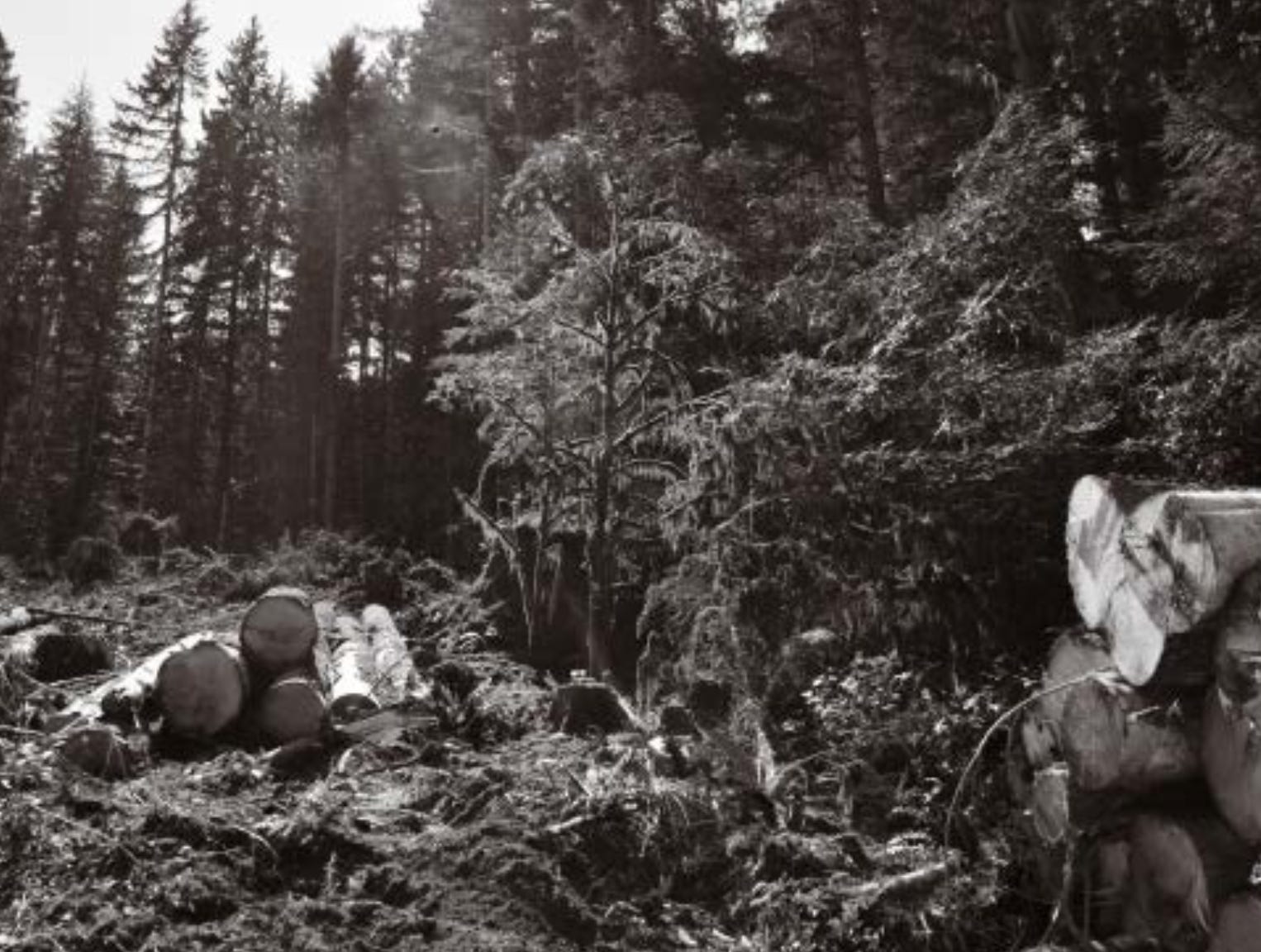
Unless you are in a rare forest abundant with Pacific yew, or your eye is trained to locate the occasional moss-covered runts among towering conifers, you likely won’t find many in your forest excursions. Decades of exploitation have taken a heavy toll, literally changing the landscape. Merely a century ago James Duff wrote in Bows and Arrows about the profusion of yew in the Pacific Northwest, “I may as well mention still another false supposition, this being that of the scarcity of yew. This is pure fiction. One can secure it from the West Coast by the carload. At any rate, I have had an offer of such a load—an amount of yew such as I could never use or even sell during my life.” Gone are the good ole days.
Today Taxus baccata is faring much better than Taxus brevifolia, but that has not always been the case. During the peak of longbow usage in England, between the 14th and 16th centuries, demand for yew staves was extraordinary. According to author Andrew J. Halpin in Archery and Warfare in Medieval Ireland, yew bowstaves were being imported into England from the Baltic as early as the late 13th century. In the early 14th century there is a record of the purchase of 2,160 longbows from Spanish yew. Halpin continues with a document from 1574 that indicates that Italian yew was considered the best, but yew from Austria, Switzerland, and Bavaria were also good. He reports that “Up to one million yew staves may have been exported between 1521 and 1567” from these regions.
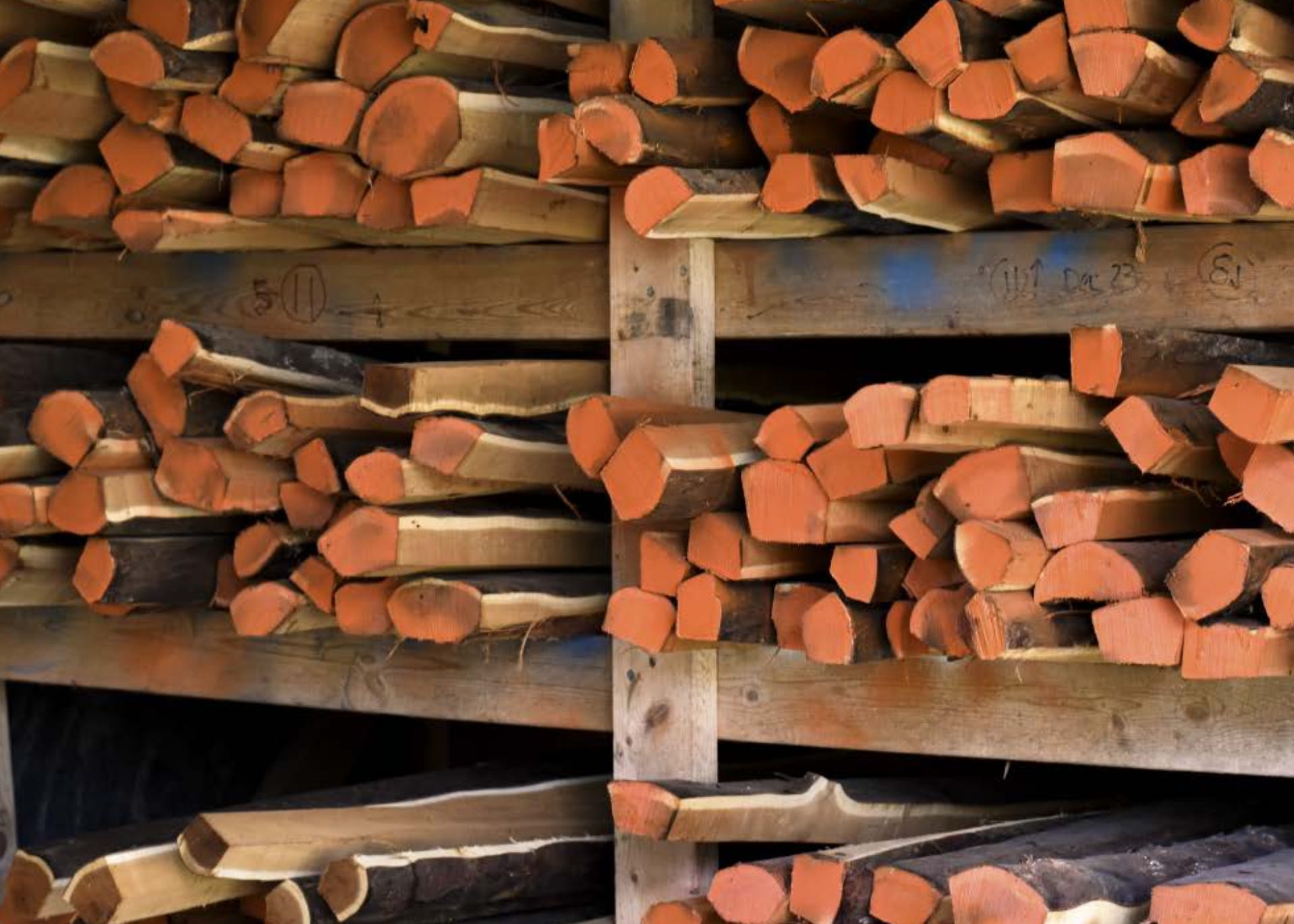
Having now mentioned many types of European yew by country of origin - Spain, Italy, England, Ireland, Austria, Switzerland, Germany - it is worth noting that all of these are the same species, Taxus baccata. Although we will never know the true toll of the demand for yew staves in Medieval Europe, it is safe to say that an incalculable number of yew trees succumbed to the axe, demonstrating once again that the physical characteristics of yew has almost led to its complete downfall. On the other hand, the spiritual merits of yew have helped to preserve Taxus baccata. As it has been viewed as a sacred tree since pre-christianity, many ancient yews have been preserved in churchyards throughout the United Kingdom and northern France, and other European countries now protect yew trees.
What is it about yew that has made it such an important wood for bow making? Plenty of books expound on this topic so we won’t dwell here long. But for the newcomer to yew, it is worth mentioning yew’s natural ability to transfer the forces applied to a bow into an arrow. The heartwood of yew, sometimes orange, other times reddish brown, is excellent under compression. When the archer draws on the bow string, the heartwood on the belly of the bow compresses and rarely falters. Likewise for the performance of the white sapwood on the back of the bow. Under tension, it functions remarkably well as its fibers lengthen. It is those two opposing forces - compression and tension - that result in impressive arrow propulsion from a yew bow, shot after shot, often to a distance of well over 300 meters. As L. E. Stemmler writes in The Essentials of Archery (1942), “We are frank to confess that a fine yew bow is a joy to shoot and something to cherish.”
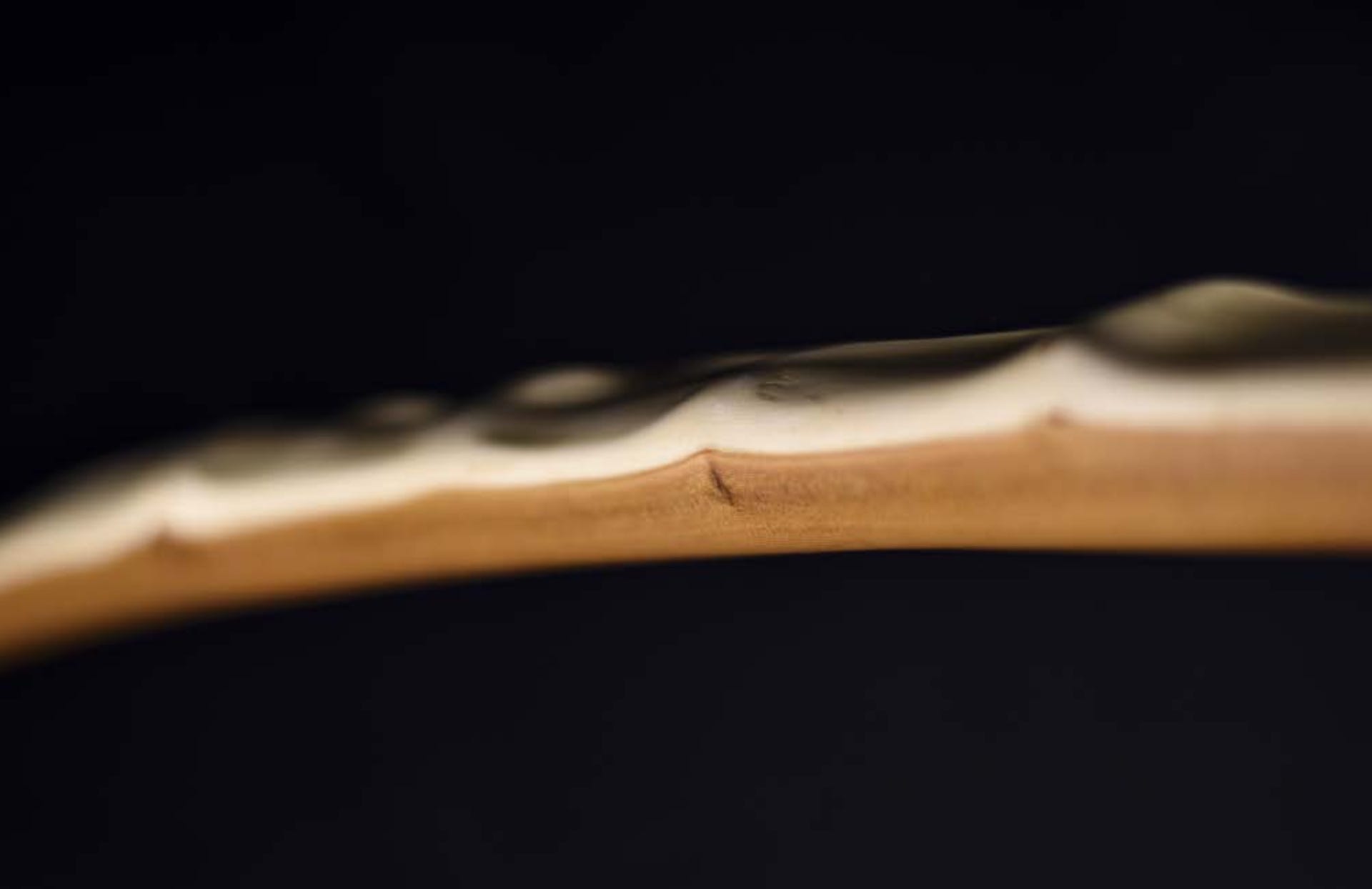
While both European yew and Pacific yew make arguably exceptional bows, they are not equals. Pacific yew is a very slow grower and thus the rings of the heartwood are more densely positioned. Whether this makes for a better bow is a matter of opinion, and people certainly do have their opinions about it. I personally don’t have authority to weigh in as I have only carved with Pacific yew. Of the dozen or so yew bows that I have carved, I still have nine that see regular action, either by me or my students.
To get an expert comparison of the two, I turned to master bowyer Jake Fenwick of Fenwick Bows. Jake is renowned for his yew English longbows. He has worked extensively with Pacific yew and appreciates its consistent quality regardless of region of origin, be it Oregon, Washington, or British Columbia. He has found European yew, on the other hand, varies significantly depending on origin. He has carved Italian, English, and Norwegian yew and also has some Swiss yew on hand. In general, he says Taxus baccata is “heavier in the hand,” has lots of character, and performs remarkably well. He describes Italian yew as hardy, adding, “I’ve never known a type of yew to deal with knots so well.” In his experience, this is not the case for English yew, for which he says, “There is some really great stuff and some is sketchier.”
Despite the lack of consensus from bowyers about the laurels of yew, considering the impact it has had on the history of bows, this author and humble bowyer thinks that yew deserves a seat in the royal court of bow woods. Whether or not that is the throne of all thrones, perhaps we can better answer that question when we have had a chance to consider future installments of “Bow Wood Royalty.” But to put in a nod in favor of yew wood, we will conclude with how James Duff begins his chapter on bow woods in his 1927 book Bows and Arrows: “To begin with, it would be a sacrilege, almost, not to say that yew is the king of all bow woods.”
https://maryrose.org/discover/history/salvage-1836/

“Building a Better Drug”. Amy Adams. 2016. https://med.stanford.edu/stanmed/2016winter/building-a-better-drug.html