


Before I started carving bows, I had never heard of the tree called Osage orange. Perhaps it was because I had not lived or spent much time in the relatively small native range of the tree - Oklahoma, Texas, and Arkansas primarily, and parts of Kansas, Louisiana, and Missouri. While now more familiar with Osage orange, I was still surprised to learn that “it has been planted in greater numbers than almost any other tree species in North America,” according to information provided by the US Department of Agriculture.1 Even though its native range is limited, it can be found growing in all 48 contiguous states. This is good news for bowyers, but why then are good Osage staves so hard to come by?
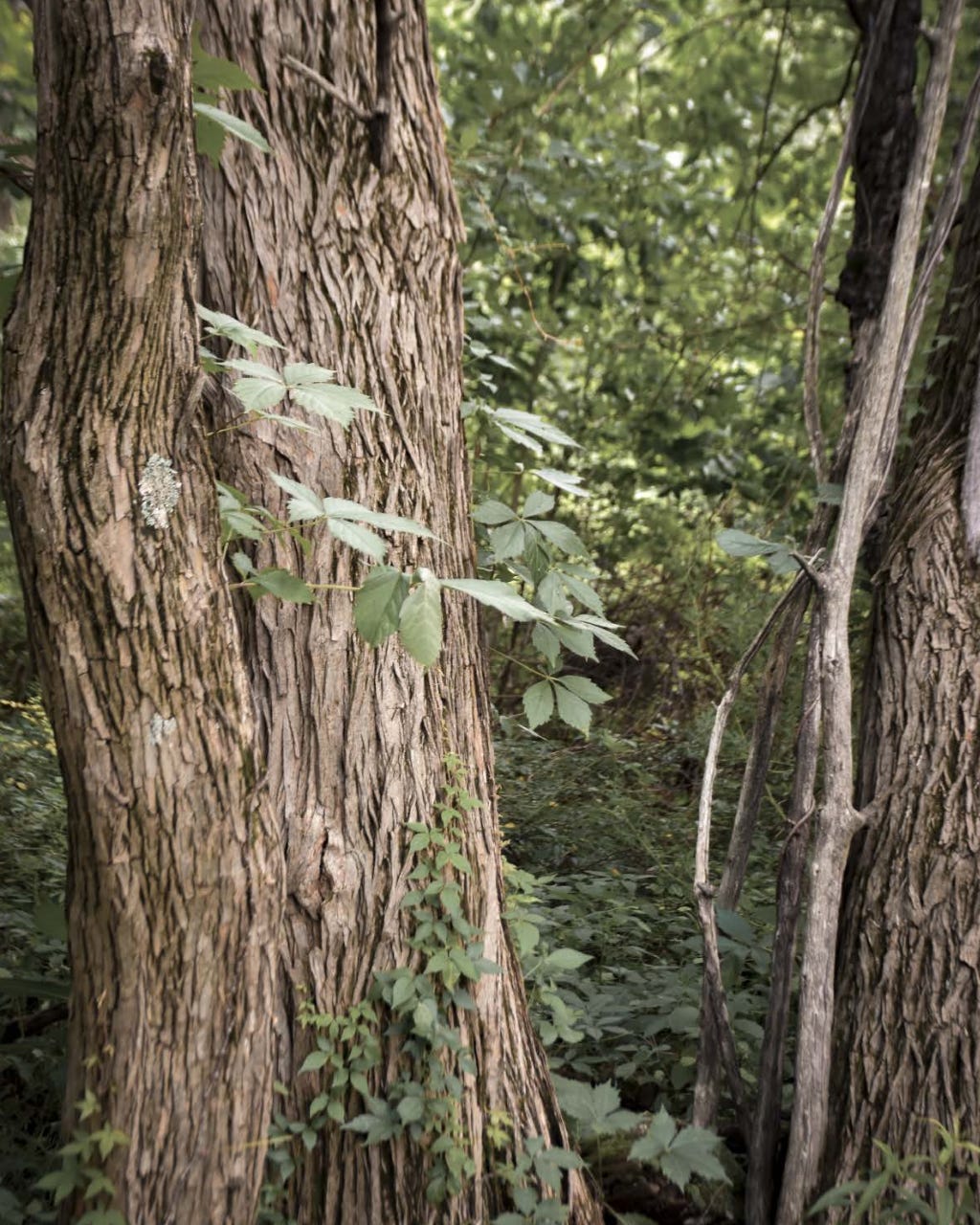
While Osage orange and seven related species were once widespread in North America, glacial movement during the last ice age whittled them down to just the one species and the limited native habitat we know of today. Other than primarily by the hand of man, Osage no longer has the means to spread to wider territories. This is not because anything has changed with the tree, but precisely because nothing has changed with the tree. The seeds of Osage are inside the bumpy, orange-sized fruit that the tree produces. These are the largest fruits of any native North American tree2, and they lack an effective dispersal system.
Bright green with brain-like grooves, the Osage fruits are commonly referred to as hedge apples, but they are also known by many other names including monkey brains, hedge balls, horse-apples, mock-orange, and monkey balls. The fruit is so large that there is no animal suitable for dispersing any of the 300 seeds inside, at least none that are alive today. But, as indicated above, Osage orange is no newcomer. In fact, it started to diverge from its South American relative, Maclura brasiliensis, more than 20 million years ago.3 Before the last ice age, the key to its vast distribution was what we refer to today as megafauna.
Mastodons, mammoths, camels, rhinoceroses, gomphotheres, and giant sloths once roamed North America coast to coast. According to Joe Boggs in the article “Bois D‘Arc” published in 2021 by Ohio State University, “These megafauna could take mega bites and large fruits rewarded both beasts and plants. These big animals served as high-capacity moving vans for spreading seed; a dispersal mechanism known as endozoochory.”
This symbiosis with megafauna could also explain why Osage orange is heavily thorned along its branches. While the tree needed megafauna to eat its fruit to distribute its seeds, it did not benefit from megafauna eating its leaves. Once an evolutionary protective mechanism, the thorns lost their purpose when the megafauna left. But, in a twist of fate, those thorns in very recent history played an important role in redistributing the tree, possibly more than the fruit ever did.
Remember the earlier claim that Osage orange has been planted in greater numbers than perhaps any other tree in North America? This is because the thorns made such an effective barrier. The trees were planted extensively as living fences and hedges, earning the moniker hedge apple. While the wood was once a valued commodity of Native Americans for tools, bows, and other weapons, it was revered by farmers in the mid-1800s for its ability to keep commodity animals in and predator animals out.
According to Jim W. Grace in his 1995 article “The Enduring Osage Orange,” in Kansas “between 1865 and 1939, nearly 40,000 miles of Osage orange hedgerows were planted by private landowners. Prairie settlers in other states, including Missouri, also were planting thousands of miles of Osage orange hedge at this time.”
With the proliferation of Osage hedgerows - it has been reported that more than a million miles of them have been planted across the United States - other benefits were soon realized: it served as an effective windbreak, and as such the Works Progress Administration found it highly useful to prevent soil erosion. The WPA planted thousands of miles of it throughout the 1930s Dust Bowl to stabilize soil.4
To keep up with the demand for Osage orange, hedge nurseries sprang up in great numbers. According to Grace, “One hedge apple would yield about 300 seeds. One bushel…about 80 apples - would yield 24,000 seeds.” He indicates that planting contractors were available to establish hedgerows at $120 per mile, and in the 1860s, the seed “market went wild.” Prices increased from $8 a bushel of fruits to $50. “In one year alone,” according to Grace, “18,000 bushels of seeds were shipped to the northwest United States - enough seed to plant over 100,000 miles of Osage orange hedge!”
Barbed wire was not invented until 1867, and it was decades longer until its widespread use. Joseph Glidden, who was awarded the modern patent for barbed wire in 1874, claims to have found his inspiration from Osage orange, the tree that barbed wire would largely replace. But even though it would supplant the role filled by Osage thorns, to be effective, barbed wire still relied on wood in the form of fenceposts. Osage is extremely dense and rot resistant, and while its status faltered for hedgerows, it gained prominence for fence posts. According to the US Department of Agriculture, “About 3 million posts were sold annually in Kansas during the early 1970s.”5 That’s a lot of staves stuck into the ground.
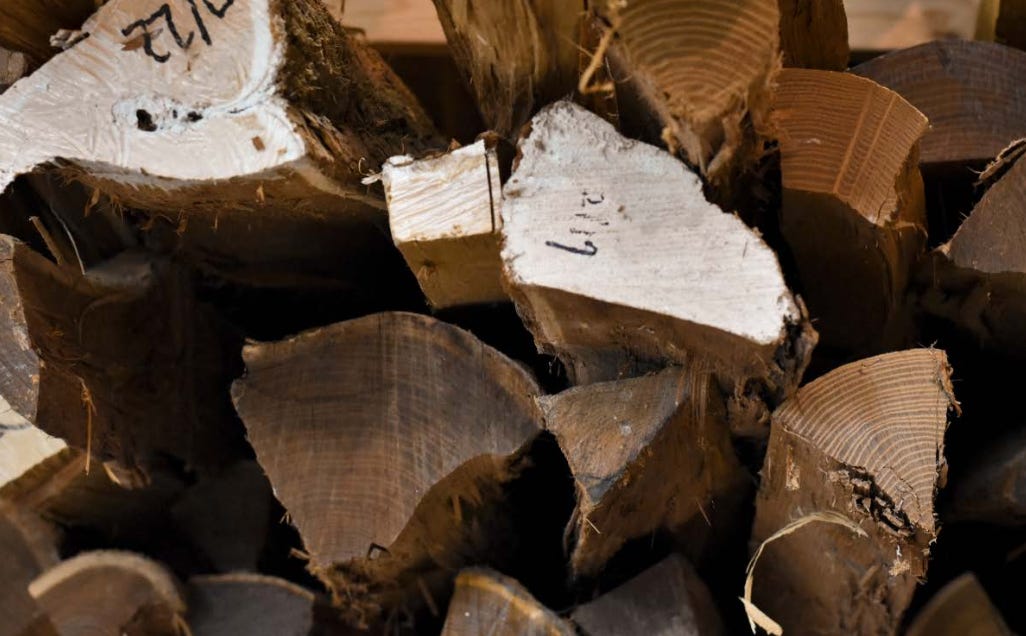
While the Native Americans revered Osage orange for making bows, pioneers recognized its worth for many other uses: wagon wheels, chuck wagons, cattle yokes, railroad ties, bridge pilings, insulator pins, telephone poles, street paving blocks, tool handles, and much more.6
But it was not just the bow for which Native Americans valued Osage orange, which is in the same family as the mulberry tree, Moraceae. Grace identifies many uses. “The stout wood was well suited for war clubs and tomahawk handles. The ridged and scaly bark of the trunk provided both a fiber for rope and tannin for making leather. Root tea was used to wash sore eyes. The roots and inner bark were used to make a light orange dye.”
In fact, the wood was so prized by Native Americans that its namesake is the Osage tribe who shared the same territory as the tree and from it carved tools and weapons. The Osage people did not name it Osage, nor did they call themselves the Osage nation. This name allegedly comes from what the French thought they heard the tribespeople call themselves and from what the English then thought they heard the French call the tribe. Someone, likely an Englishman, then used that name and applied it also to the tree. We know the French gave the tree a different name based on the bows the Osage people carved from the wood: bois d’arc, meaning “wood of the bow,” which was bastardized by English speakers into bodark. Sadly, we don’t seem to know what name the Osage people used for this tree that was so important to them.7 The “orange” in the English name allegedly comes from the fruit’s similarities in both size and scent to an orange.
The Latin binomial today is Maclura pomifera. The genus was named in 1818 by Thomas Nuttall in honor of geologist William Maclure, and pomifera, meaning fruit-bearing, was a carryover from the previous name. According to John Hetman in the article “Maclura pomifera: Neither Apple nor Orange,” only a year prior, Constantine Samuel Rafinesque named the tree Loxylon pomiferum, meaning “poison apple.” But according to a short article published by the University of Evansville in Indiana, Rafinesque named the genus Oxyton, not Loxylon, but soon changed the spelling to Toxylon, in reference to the Greek word toxon meaning bow.8 Yet another source, the Global Biodiversity Information Facility, says it has also been referred to as Ioxylon, Joxylon, and Myroxylon.
This is reminiscent of the confusion around the genus name for yew, Taxus, which you can read about in the previous installment, “Bow Wood Royalty, Part 1”. In the case of Osage orange, did Toxylon come from toxon meaning bow, or toxykon meaning poison? Hetman wrote that Loxylon means poison, but that does not appear to be the case, and furthermore, the hedge apple is not considered to be poisonous. And then there is the first written name, allegedly, Oxyton, which does not seem to fit anywhere. Perhaps this is why only a year later the genus name was changed to Maclura.
Because of characteristics of Osage orange - high density, remarkable elasticity, good weight to strength ratio, phenomenal rot resistance - Osage bows were extremely sought after. According to Grace, “It was used by Shawnee and Wyandotte Indians in Ohio and the Blackfoot Indians in Montana.” He indicates the bows must have been traded over a distance of 2,000 miles. He reports that bow blanks and bows were “prime items of barter among tribes,” with one report indicating that a well-balanced bow was worth a “comely young squaw” in trade.
Osage bows were not just crafted by the Osage nation. “The Comanche, Kiowa, and Pawnee crafted high-performance self-bows from the tree,” reports Joe Miller in 2009 in his thesis “A Tale of Two Weapons” for the University of North Texas.9 He indicates osage bows were worth a horse and blanket. It was from Miller that I learned that the oldest excavated Osage bow in North America is “from a burial at the Mounds Plantation site in Louisiana.” Radiocarbon dating places the bow at about 1,000 years old.
In A Study of Bows and Arrows in 1923, Saxton Pope speaks of a Yaqui Osage orange bow he studied. “This is a much used bow… It seems to have been made by splitting a limb; there are many knots on the bark side, which constitutes the back. These knots are raised, no attempt at leveling them having been made.”
Pope also shares performance characteristics of the bow. “It is a strong, useful bow, jars a little in the hand, very resistant at the last of the draw, but a pleasant bow to shoot…made for strong effective shooting. When drawn 28 inches it pulls 70 pounds and casts the flight arrow 210 yards…the best distance made by any aboriginal bow in our tests.”
The Pawnee warrior, based in modern Nebraska and Northern Kansas, also preferred a bow of bois d’arc, according to Otis Mason in his 1893 book North American Bows, Arrows and Quivers. “Besides the one in actual use he [the Pawnee warrior] would often have in his lodge a stick of the same material, which at his leisure he would be working into shape as a provision against possible exigency.” He continues, “Bows of this wood were rarely traded away.” The Pawnee maintained a “sort of commerce” with tribes from the south so they could access Osage orange.
Mason also writes of the Blackfeet from “buffalo country in northwestern Dakota.” He says, “The Blackfeet made their bows of the Osage Orange, but they were compelled to procure it by trade from the tribes down the Arkansas River.”
Finding straight staves of Osage orange is no easy task. So common are the curvey staves that a “snakey Osage” bow has become a commonplace bow shape among primitive archers and bowyers. According to Adolph Shane in his 1936 book Archery Tackle, a friend of his was determined to secure a good log of Osage from his father’s Kansas farm, “where stood several thousand of these trees in hedge rows.” After inspecting every tree, he found only two that he thought were worth cutting.
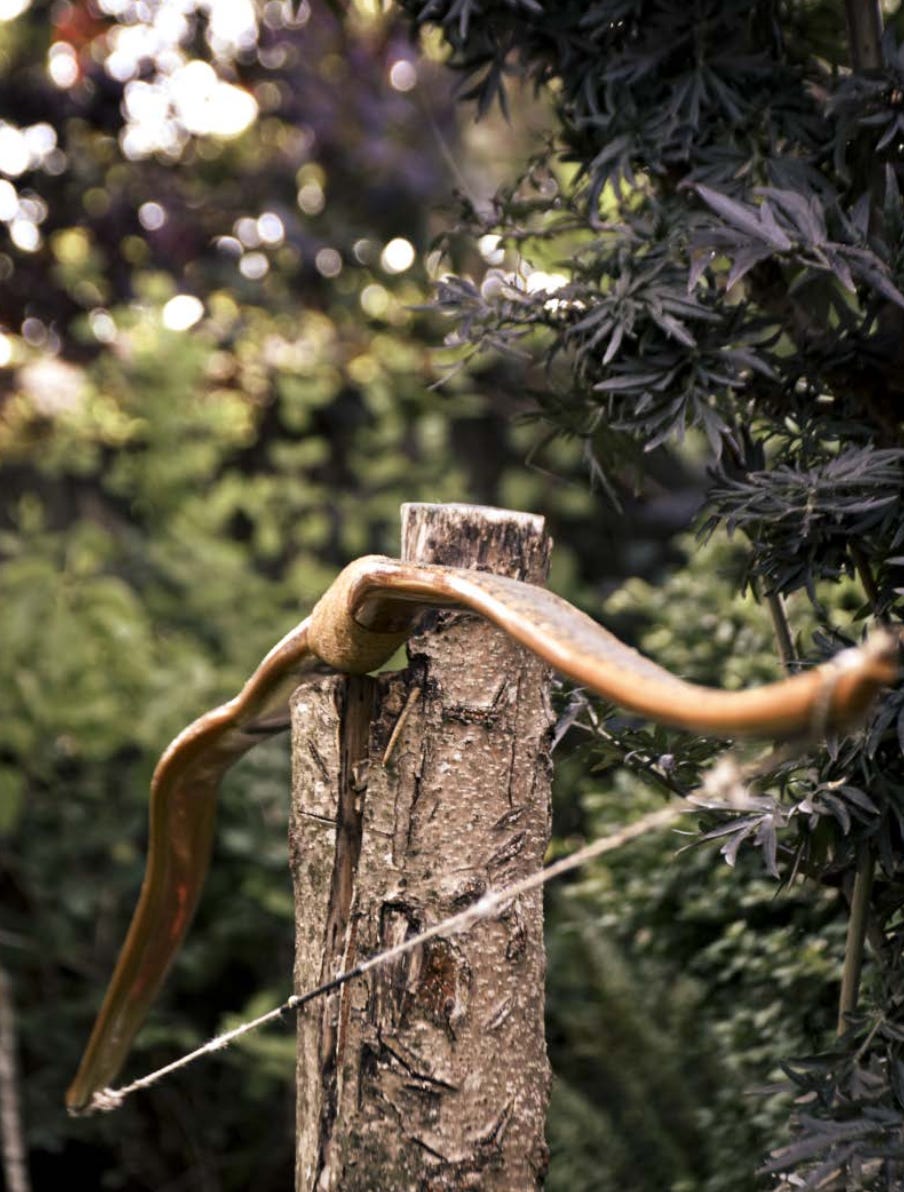
But when good staves can be found, “As an all-around bow wood, Osage orange ranks high,” according to L. E. Stemmler in his 1942 book The Essentials of Archery. “Good staves,” he says, “yield hard shooting, tough, sturdy bows that will stand lots of abuse.” He found Osage possessed none of the “temperamental aspects of yew.”
Continuing with the comparison to yew, James Duff in his 1927 book Bows and Arrows says, “Many of the virtues of yew might also be claimed for Osage orange.” He continues by adding that yew is classified as one of the softest hardwoods while “Osage orange is a real hardwood in every aspect.” In Duff’s opinion, an Osage bow from a well chosen and properly seasoned stave will outlast any other kind of bow. He cautions, however, that an Osage bow “is usually a hard master.” He says, “Only the archer who can claim the best of physical prowess can ever hope to get the best out of one of them.”
Today’s bowyers are nothing if not complimentary of Osage orange. Renowned Austrian bowyer Phil Steinhauser of Rockhauser Archery and author of two books on bow carving, loves the challenge of carving bows from any species of wood. But, he says, based on the versatility and final product, his favorite wood to carve is Osage orange.10 It is no coincidence that his favorite book on bow carving is Hunting the Osage Bow by Dean Torges.
I have only had the luxury of carving one Osage orange bow, which was under the expert tutelage of master bowyer Weylin Olive of Swiftwood Bows. To the bowyer, Weylin needs no introduction. His bows, many of which are carved from Osage, are some of the finest primitive bows available today. Weylin teaches students to carve Osage orange bows during the several workshops that he offers annually, and I had the pleasure to carve one with him while writing the book Quiver.
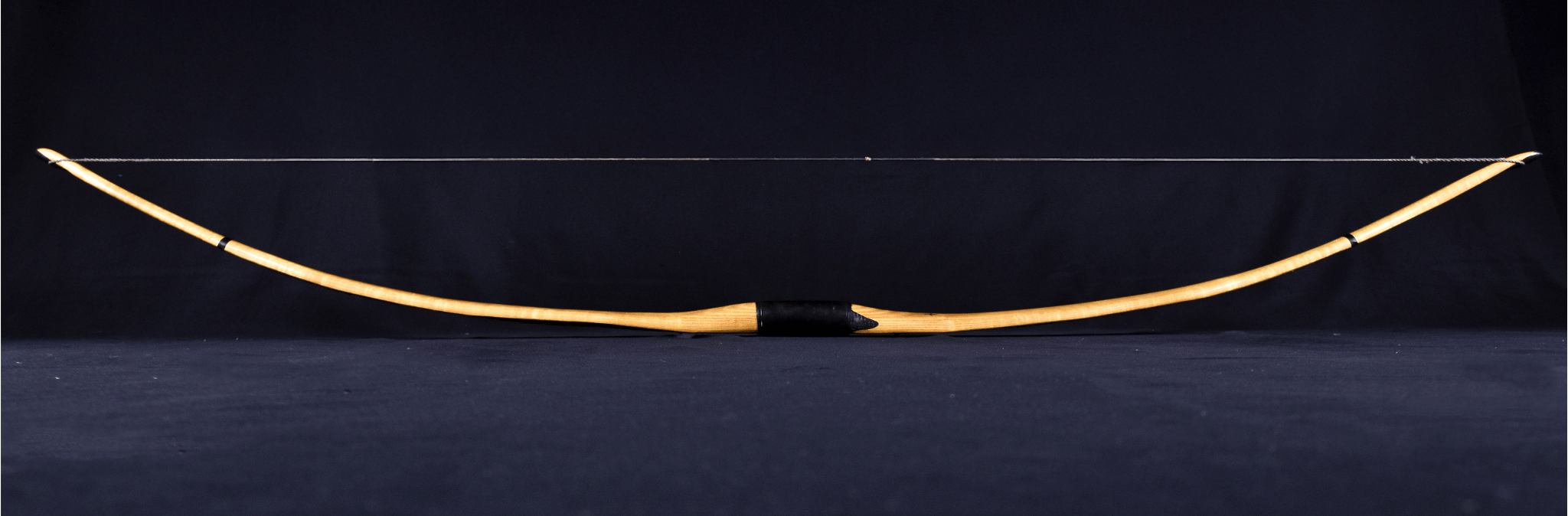
When I asked Weylin about his favorite bow wood, he hesitated. “My knee-jerk answer is Osage, and it’s indisputably an amazing bow wood.” The hesitation was because of a caveat: while he loves to carve Osage bows, he prefers to shoot Pacific yew bows.11
The same sentiment is shared by Pete Woodland of Heritage Bows, whose love for carving Osage is also not diminished by his preference for shooting yew bows. I will let Pete’s eloquent musing close the topic of Osage orange’s irrefutable seat in the court of royal bow woods.
“To work Osage in the quietude of one’s studio, with hand tools, moving through the young and old grain, navigating knots, the smoky sweet fragrance of the wood, the deep golden orange, the bow taking shape, is to immerse oneself in a deep meditative state, somewhere near the realm of the shaman and the poet.”
“The Odd History of the Osage Orange Tree” by Douglas Main. 2021.
Ibid.
https://bygl.osu.edu/node/1884
https://research.fs.usda.gov/silvics/osage-orange
https://mdc.mo.gov/magazines/conservationist/1995-11/enduring-osage-orange
https://bygl.osu.edu/node/1884
https://faculty.evansville.edu/ck6/bstud/osage.html
https://digital.library.unt.edu/ark:/67531/metadc10986/
Howard and Harper. 2026, Quiver: The Art of Life through Bowcraft
Ibid.